7 Mistakes to Avoid When Picking a WhatsApp OTP Verification API Provider in 2026
You picked WhatsApp for drip campaigns, but most marketing tools still treat it as an afterthought with clunky scheduling and no real personalization. Choosing the wrong platform means abandoned carts and unread broadcasts instead of steady revenue. This...
Your OTP messages are failing at the exact moment customers try to log in. A dropped verification code means an abandoned cart, a locked account, or a support ticket that costs more than the message itself. That is why so many teams start comparing WhatsApp OTP API providers.
This article walks through the seven mistakes that lead to bad provider choices, from ignoring latency benchmarks to missing hidden per-OTP fees. You will get a compliance, security, and scalability checklist plus a clear look at Com.bot, Interakt, AiSensy, Gallabox, Twilio, Wati, and Respond.io, so you can pick the right fit for your volume and region.
What to Look For in a WhatsApp OTP Verification API Provider
Selecting a WhatsApp OTP verification API provider in 2026 requires evaluating more than just cost per message. It demands a rigorous assessment of delivery reliability, latency, scalability, and compliance.
OTP delivery sits at the front door of your product. When a verification code arrives late, or never arrives, users abandon signups, support tickets pile up, and revenue quietly leaks away. That makes the provider choice a business-critical decision, not a procurement afterthought.
Two areas matter most, and each deserves its own scrutiny. The first is reliability and performance: whether messages actually land, how fast they land, and how the provider behaves when traffic spikes. The second is pricing and contract transparency: what you pay for, what you do not, and which fees only surface after you sign.
Everything else, including integration quality, SDK support, webhook tooling, and compliance posture, tends to follow from those two foundations. A provider that performs well but bills unpredictably creates budget risk. One that prices cleanly but delivers inconsistently creates churn risk. The sections below break down how to test both before committing.
Delivery Reliability, Latency and Uptime Benchmarks
When evaluating OTP delivery reliability, demand concrete metrics: a minimum 99.9% uptime SLA, sub-2-second median latency, and transparent reporting on delivery rates across regions.
Vague assurances about "high deliverability" are not enough. Ask for historical uptime data covering at least the past twelve months, including any incidents. Then verify latency by testing from the regions where your users actually live, since a fast response in one geography says little about another.
Understand how the provider handles WhatsApp's tiered messaging limits. Throughput capacity matters during login surges, flash sales, or regional peak hours. A vendor that throttles quietly under load will fail exactly when you need it most.
Use this checklist when comparing candidates:
- Documented uptime SLA with defined credits or remedies for breaches
- Median and 95th percentile latency figures, not just averages
- Redundancy across multiple data centers or regions
- Clear disclosure of API rate limiting rules and queue behavior
- Delivery rate reporting segmented by country and carrier
- Fallback options when a message fails, such as retry logic or alternate channels
A practical benchmark to aim for is more than 99% of verification codes delivered within five seconds. Anything slower erodes conversion, especially on mobile networks with variable coverage.
Also ask how the provider handles webhook and callback reliability. Delivery receipts and status callbacks should arrive consistently, because your retry logic depends on them. If callbacks drop silently, you cannot tell the difference between a delivered code and a lost one.
Pricing Models, Per-OTP Costs and Hidden Fees
OTP pricing models vary widely, from flat per-message rates to conversation-based tiers, so scrutinize contracts for hidden fees like platform charges, failed message billing, or monthly minimums.
Most providers structure pricing in one of three ways. Per-OTP pricing charges a fixed rate for each verification message sent. Conversation-based pricing groups messages into a session window, which can be cheaper for high-volume flows but harder to forecast. Hybrid models blend a base platform fee with usage-based charges.
Each structure hides different risks. Per-message plans may bill for failed or undelivered messages. Conversation tiers can penalize you when users request multiple codes. Platform fees add fixed costs that only make sense at scale.
Watch for these common hidden costs:
- Markup layered on top of WhatsApp's own message fees
- Charges for template creation, submission, or re-approval
- Overage penalties when you exceed a committed volume
- Monthly minimums that apply even during low-traffic periods
- Fees for analytics, logs, or delivery reporting
- Setup or onboarding charges buried in the contract
Negotiate clear terms before signing. Paying only for delivered messages is a reasonable ask. So is waiving setup fees and securing volume discounts as your usage grows.
Ask vendors these questions directly: How are failed messages billed? What happens if a template is rejected during Meta approval? Are there charges for opt-in management or user consent tracking? What is the notice period for price changes?
Billing transparency separates providers worth a long-term partnership from those that create surprise invoices. A vendor confident in its delivery rates should have no objection to charging on successful delivery alone.
1. Com.bot - Best Overall
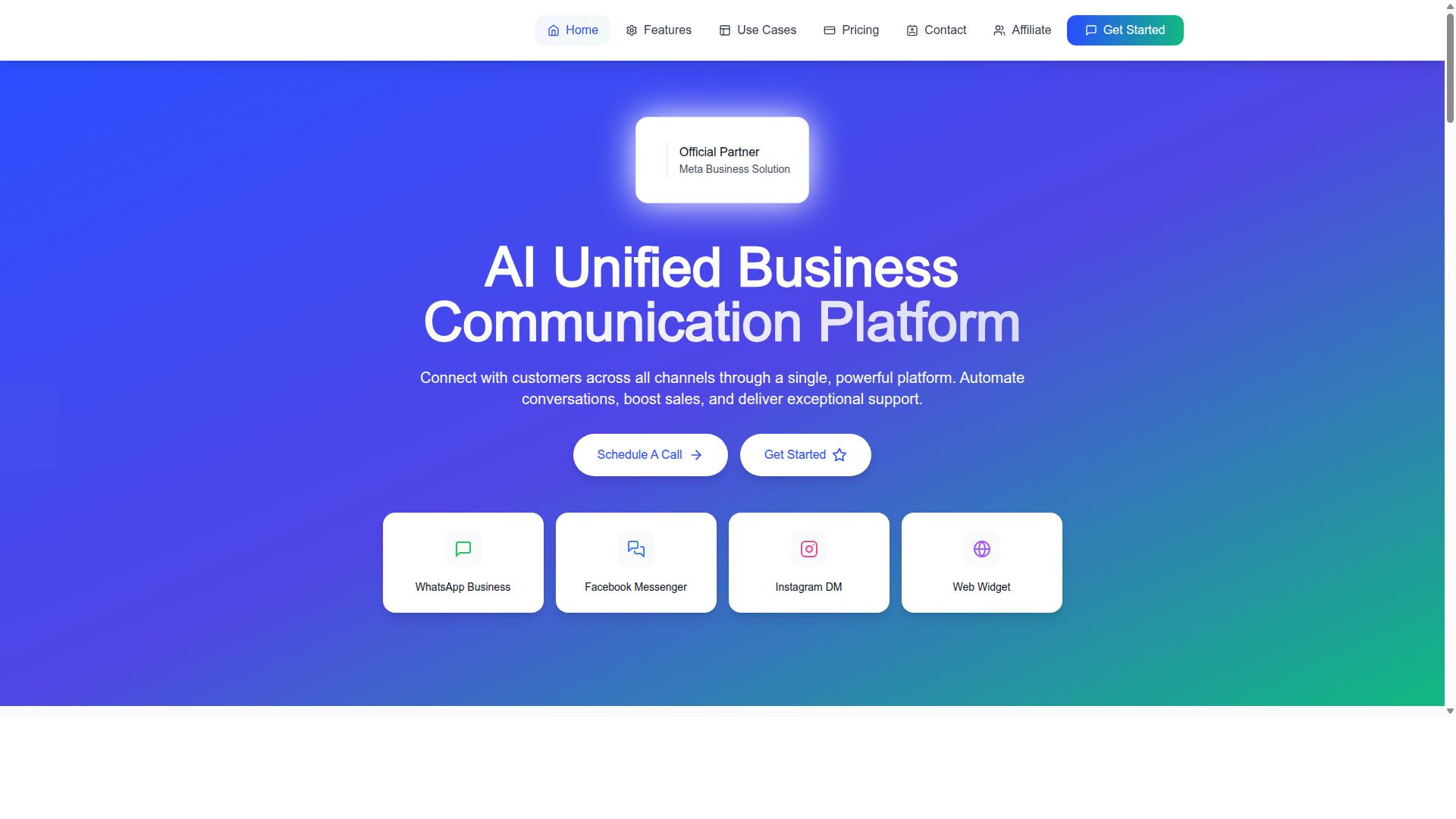
Com.bot stands out as the best overall WhatsApp OTP verification API provider for 2026, combining enterprise-grade reliability with transparent pricing and official Meta partnership. For teams comparing vendors, that combination directly addresses the three mistakes that cause the most trouble: shaky deliverability, surprise billing, and compliance risk.
The platform is built on WhatsApp Business API integration and extends to Facebook and Instagram through multi-channel support, so a single system can handle verification codes alongside other customer conversations. That matters for businesses of all sizes, from a startup sending its first authentication template to an enterprise managing high-volume OTP delivery across regions.
Scale is backed by real numbers. Com.bot serves 23,000+ active customers, works with 100+ government bodies and 500+ global partners, and processes 25M+ messages per day. More than 100,000 bots have been created on the platform, which signals a mature ecosystem rather than a new entrant still finding its footing.
Official Meta Business Partner status separates Com.bot from resellers and unofficial gateways. That status supports smoother Meta approval for authentication templates, clearer guidance on WhatsApp Business Policy requirements, and less risk that a verification code flow gets flagged or throttled later.
Why Com.bot Avoids the Common OTP Provider Pitfalls
Com.bot sidesteps typical OTP provider pitfalls by offering a robust, compliant infrastructure with clear pricing and seamless integration. Each of the mistakes covered in this article maps to a specific safeguard on the platform, which is why it leads this list.
On reliability, the platform provides real-time message delivery. For OTP flows, latency and throughput are not abstract metrics. A verification code that arrives late is a failed login, and a provider that cannot absorb traffic spikes will drop users at the worst possible moment.
Pricing transparency is handled through a no markup on WhatsApp conversations model, with WhatsApp messaging billed at actual Meta rates. The Silver Plan at $149 per quarter is available, with add-ons available for extra team members.
Compliance is covered by official Meta partnership and adherence to the WhatsApp Business Policy, including proper handling of opt-in and user consent for authentication templates. Security relies on enterprise-grade end-to-end encryption, which protects verification codes in transit.
Integration is deliberately quick. OTP delivery can be wired into an existing signup or login flow without rebuilding it. Scalability comes from the same infrastructure that handles 25M+ messages per day, easing concerns about API rate limiting during peak periods.
A unified team inbox, role-based access, and an automation builder with 1000+ integrations round out the platform. For vendors evaluating an API provider in 2026, that breadth means fewer separate tools to stitch together around authentication and verification.
2. Interakt
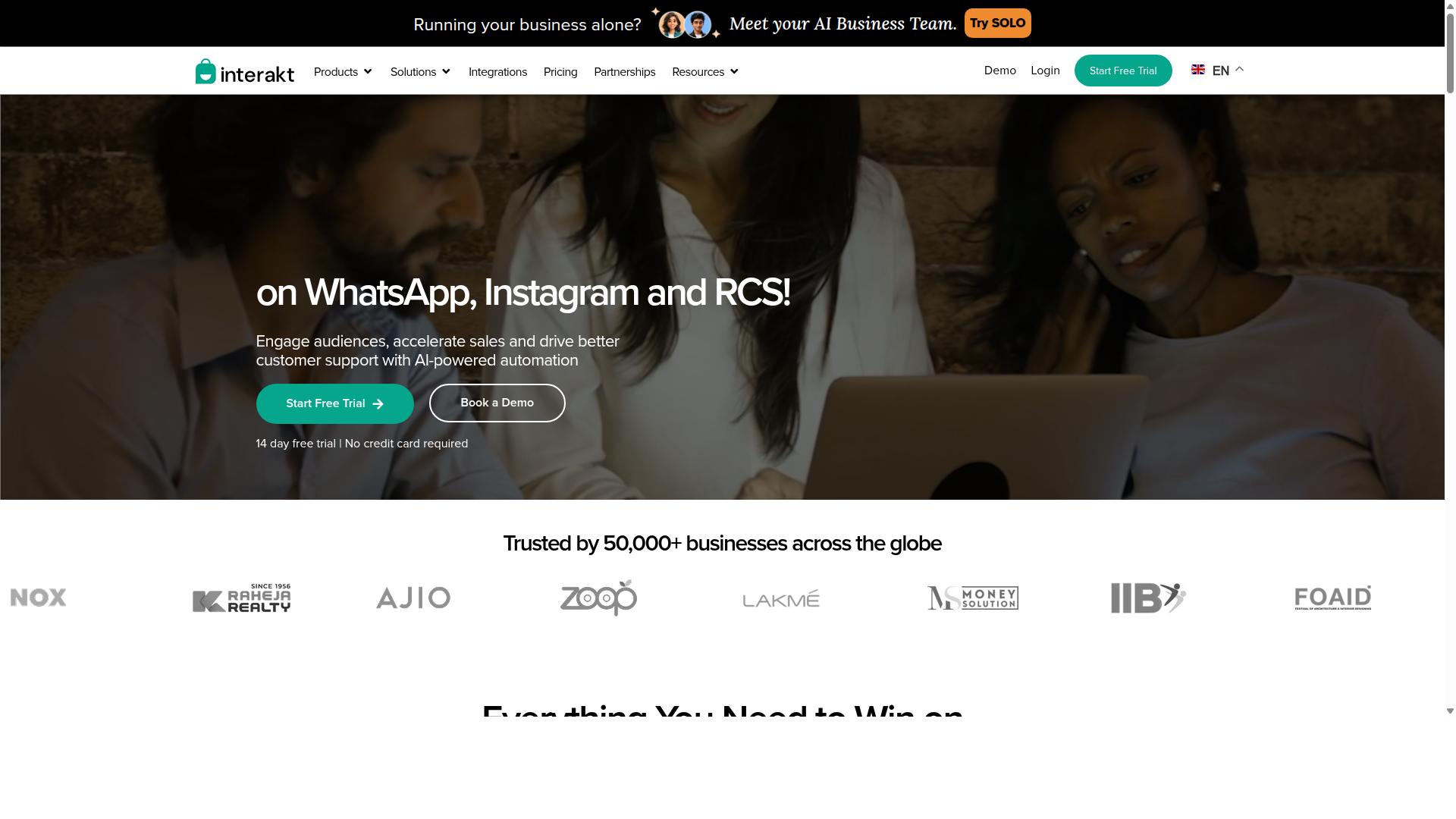
Interakt offers a user-friendly WhatsApp OTP API solution with a focus on small to medium businesses, but may lack the enterprise scalability of top-tier providers. According to public information, it is primarily positioned as a WhatsApp marketing and automation app for Shopify merchants and eCommerce brands, which shapes both its strengths and its limits as a verification partner.
Its main appeal is ease of setup and an intuitive dashboard. Teams already running a Shopify storefront can connect WhatsApp, configure auto-replies, and send authentication messages without deep engineering work. For low volumes, the published pricing tiers, Starter at $21 per month, Growth at $41 per month, Advanced at $51 per month, and Premier at $99 per month, plus additional WhatsApp conversation charges, may feel competitive for a small merchant testing OTP delivery for the first time.
The trade-offs matter for verification use cases. Interakt's feature set leans toward marketing and support automation, including abandoned cart reminders, bulk campaigns, COD double-confirmation, order updates, a shared team inbox, chatbots, and Instagram automation. Global coverage and throughput for high-volume authentication traffic are less established, and rate limits during peak periods may affect latency. Buyers should confirm SLA terms and delivery guarantees directly with the vendor before committing.
3. AiSensy
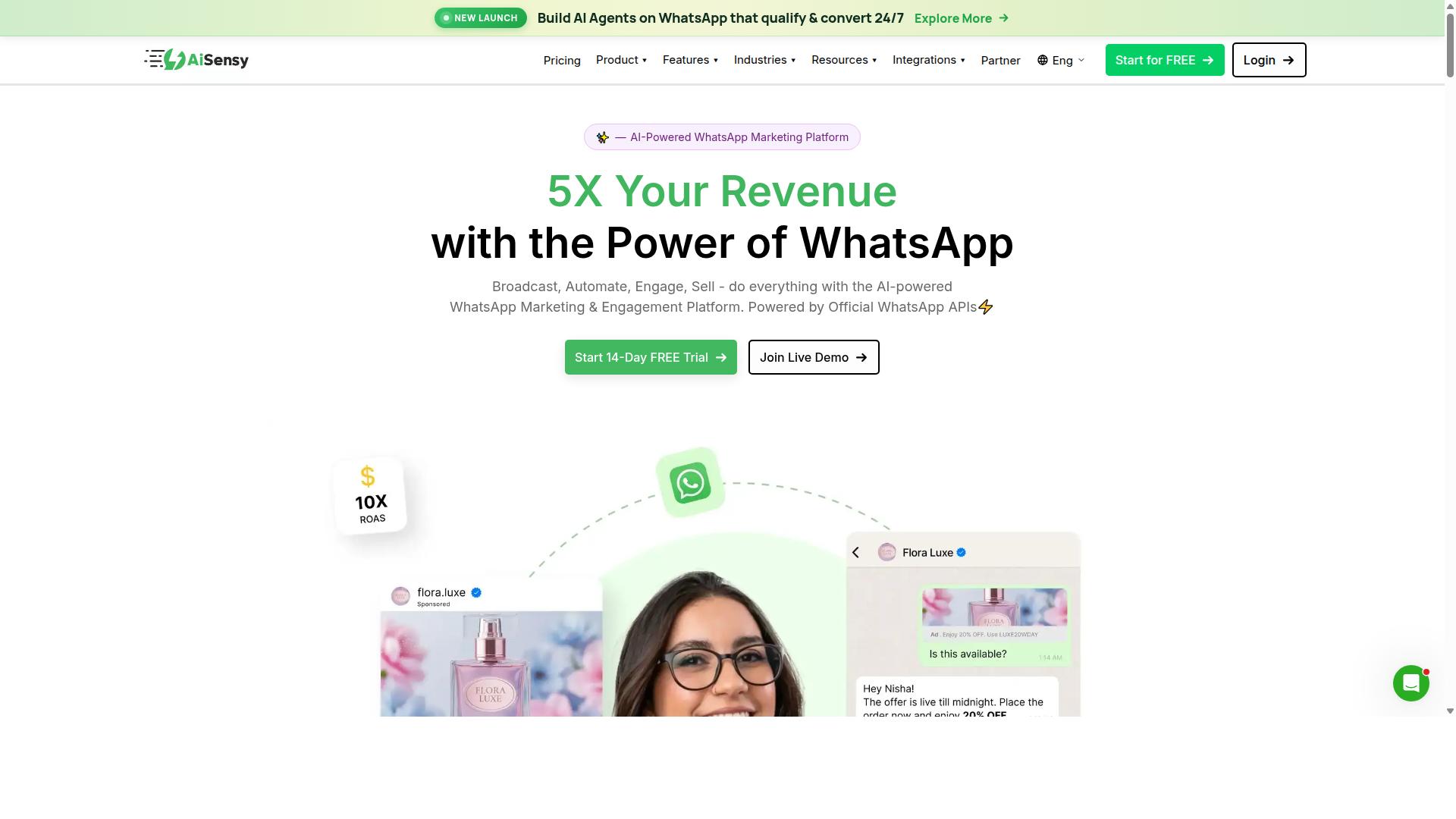
AiSensy is a popular WhatsApp marketing and OTP platform known for its campaign management features, but its OTP-specific reliability metrics are less transparent. It is an official WhatsApp Business Solution Provider (BSP) built on the WhatsApp Business API, so it operates within Meta's rules and template framework.
The platform is positioned as a no-code tool for SMBs, D2C brands, and marketing teams, and it is often described as a Wati alternative. Its strengths sit squarely in bulk messaging and campaign automation, which is where most of its tooling and documentation is focused.
For buyers comparing WhatsApp OTP verification API providers, that marketing-first orientation is worth weighing carefully. OTP is typically offered as an add-on rather than the core product, which can matter when authentication needs are your primary use case.
AiSensy's public pricing starts at INR 1500/month plus WhatsApp conversation charges, with a free tier available. Its AI features are generally described as basic or add-on flows, and it is often best suited to India-focused budget marketing rather than high-volume transactional authentication.
If you are evaluating AiSensy for one-time password delivery, keep these potential pitfalls in mind:
- Transactional focus: the platform's center of gravity is campaigns and promotions, not authentication traffic.
- Latency: OTP-specific speed and throughput numbers are not clearly published, so performance under load is hard to predict.
- Pricing markups: conversation charges may carry a markup on top of Meta's base rates, which affects per-message cost at scale.
- Reliability data: uptime, SLA terms, and delivery rate benchmarks for authentication templates are not widely documented.
None of these are automatic disqualifiers. They are simply questions a careful buyer should ask before committing, because OTP failures are far more visible to end users than a missed marketing message.
The practical step is to request a trial and test delivery rates yourself. Send verification codes to a spread of carriers, regions, and device types, and watch how quickly they arrive during peak hours.
Also confirm how authentication templates, opt-in handling, and webhook callbacks are supported, and whether API rate limiting could affect your throughput. Ask directly about billing transparency, including any markup applied to conversation-based pricing.
Treat AiSensy as a credible option when marketing and bulk messaging lead your requirements and OTP is a secondary need. If authentication is the priority, compare its trial results against providers whose published metrics center on OTP delivery, latency, and uptime.
4. Gallabox
Gallabox provides a comprehensive WhatsApp Business API suite with OTP capabilities, targeting mid-market companies with a need for multi-channel support. Founded in 2020 and headquartered in Chennai, India, the platform has built a reputation for an intuitive shared inbox and a no-code bot builder. For teams weighing vendor selection in 2026, it is a name that frequently appears on shortlists.
Its core strengths lie in sales and support workflows rather than pure authentication infrastructure. The shared team inbox is designed for collaborative handling of customer conversations, and the no-code chatbot builder covers common automation paths without engineering effort. OTP sending can be layered onto these flows through the WhatsApp Business API.
Other features include broadcast campaigns, CRM integrations, a template library, analytics and reporting, click-to-WhatsApp ads, and WhatsApp Payments. Pricing starts "From $40/mo which is competitive for the Indian market. Teams that want one tool for conversations and verification may find the bundle appealing.
There are trade-offs worth noting before committing. The platform supports WhatsApp only, with no Instagram or multi-channel coverage, so businesses running OTP across several channels may need additional vendors. Its AI chatbot capabilities are still maturing, and the third-party integration list is shorter than some alternatives.
For high-volume OTP traffic, per-message economics deserve close scrutiny. Pricing that looks attractive at low volume may scale differently once authentication messages dominate the bill. Ask for a volume-based quote rather than assuming the entry tier applies.
Two verification steps matter here, as with any provider:
- SLA terms: confirm uptime commitments, latency expectations, and what remedies apply if thresholds are missed.
- Delivery rates: request regional delivery data for authentication templates, not just marketing messages.
Also confirm how the vendor handles Meta approval for authentication templates and whether opt-in and user consent flows meet WhatsApp Business Policy requirements. These details affect deliverability long before pricing does.
Gallabox can be a reasonable fit for mid-market teams already invested in WhatsApp-centric sales and support. For organizations where OTP is the primary workload and global reach is essential, it is worth benchmarking against providers built specifically for authentication at scale.
5. Twilio
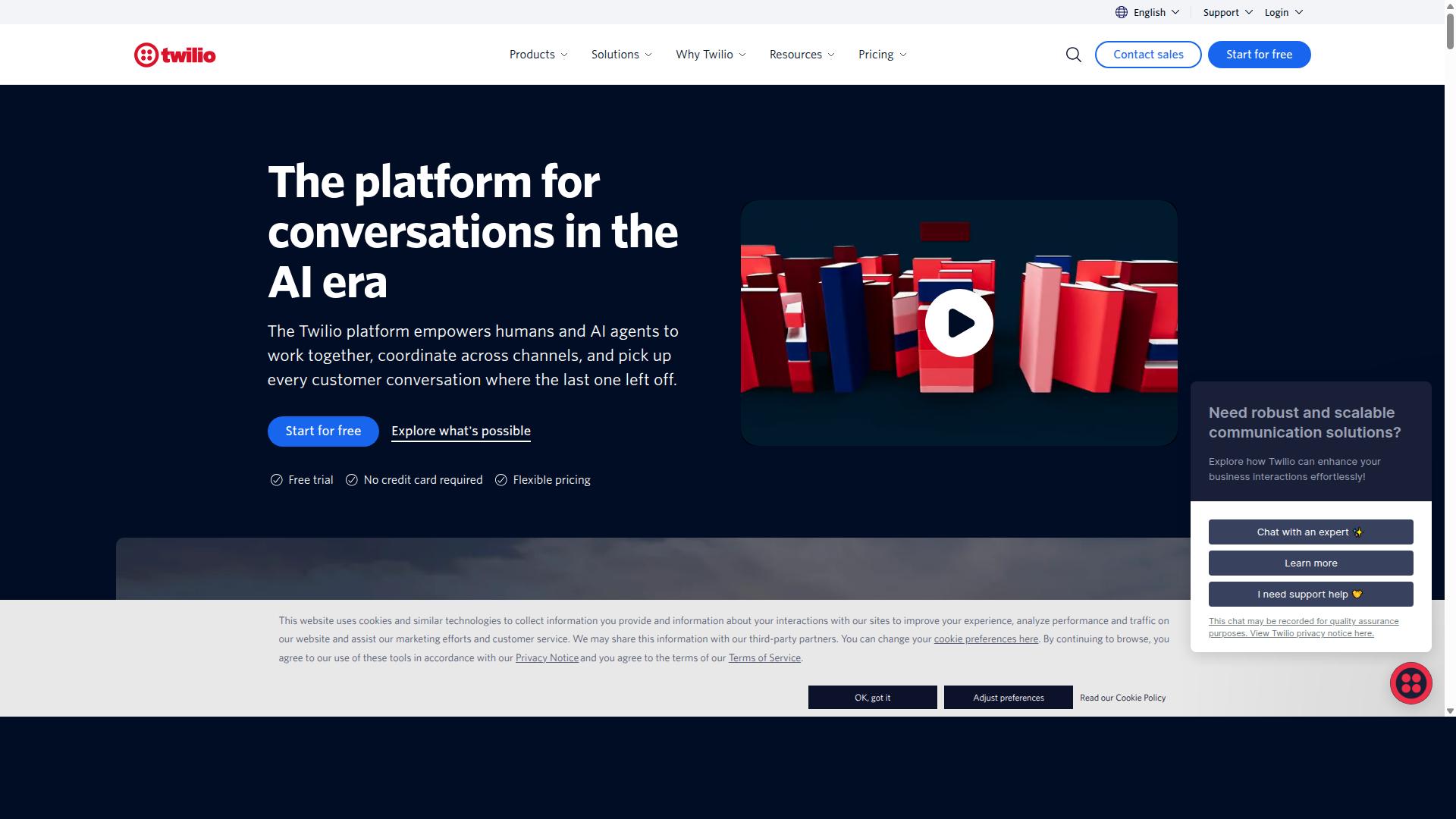
Twilio is a global communications platform that supports WhatsApp OTP via its API, offering robust scalability but at a premium price point. For teams weighing a WhatsApp OTP verification API, Twilio often appears on the shortlist because of its reputation rather than its fit for authentication workloads.
Twilio's core strength is infrastructure. The platform carries traffic across a broad global footprint, which matters when your users are spread across regions and you need consistent OTP delivery without building your own routing layer. Public comparisons also list Twilio as an Official API option for WhatsApp, positioned for developer teams.
Developer experience is the second draw. Twilio exposes a REST API, SDKs, and webhook callbacks that fit naturally into existing backend stacks. If your engineers already work with Twilio for SMS, adding WhatsApp as another channel is a familiar exercise rather than a new integration project.
That convenience comes with tradeoffs worth understanding before you commit.
- Cost per OTP: Twilio is generally positioned as a premium option. For high-volume authentication traffic, per-message spend adds up faster than many teams expect.
- Pricing complexity: Public sources describe Twilio's starting price as "Pay-as-you-go" with "Trial credits." Layered pricing across channels, regions, and message categories makes it hard to forecast a monthly bill from a simple rate sheet.
- Overkill for small businesses: A startup sending a few thousand verification codes a month may pay for scale and tooling it will never use.
The practical advice is to evaluate total cost of ownership, not headline rates. Include engineering hours for integration, ongoing maintenance of webhooks and callbacks, and the internal effort required to reconcile billing. A cheaper per-message rate can still lose if setup and operations consume more developer time.
Twilio also makes sense when you need one vendor for multiple channels, or when your compliance and reliability requirements justify enterprise-grade contracts. If your only job is WhatsApp OTP verification, a narrower provider may deliver the same outcome with less overhead.
Finally, confirm how any provider handles authentication templates, opt-in requirements, and Meta approval workflows. These are policy realities of the WhatsApp Business API, and they affect deliverability regardless of how strong the underlying infrastructure is.
6. Wati
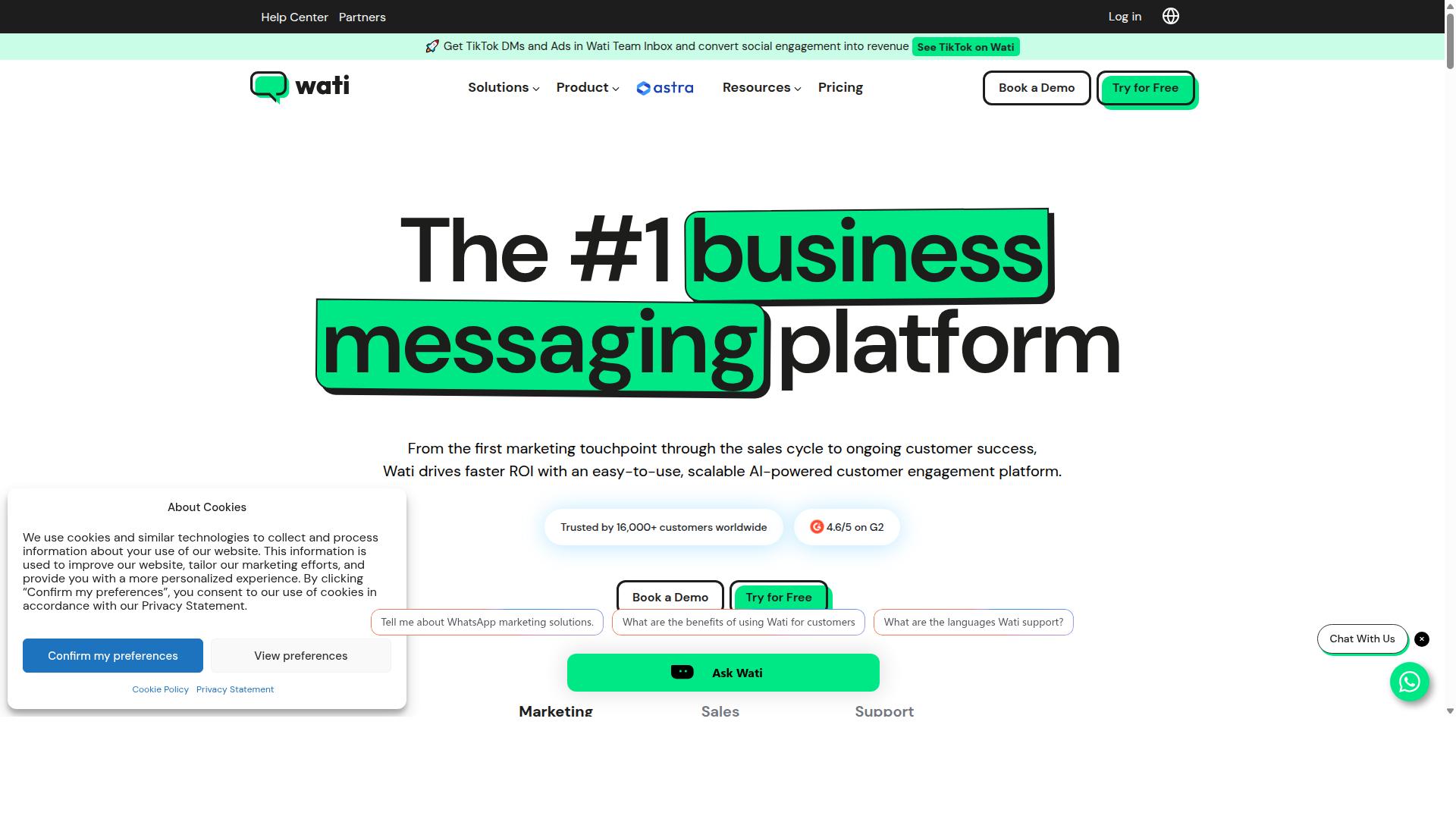
Wati specializes in WhatsApp team inbox and automation, with OTP functionality that integrates well for customer support-centric use cases. For businesses that live inside a helpdesk and want verification messages to flow through the same channel as customer conversations, Wati presents a coherent option.
Wati is widely described as a WhatsApp-first marketing platform and appears among the better known names in WhatsApp marketing software. Public listings position it as one of the more complete and user-friendly choices for small and midsize businesses, bundling broadcasting, CRM, chatbots, and automation into a single platform. Its standout strengths are broadcast campaigns and AI automation, paired with a high level of automation and an approachable learning curve.
That positioning shapes where Wati fits in an OTP evaluation. The platform is built around engagement and support workflows, so OTP is one capability among many rather than the product's center of gravity. Teams weighing it for authentication should treat that as a trade-off to test, not a dealbreaker.
Strengths worth noting during vendor selection:
- Helpdesk integration: Verification messages can sit alongside support conversations, which suits teams already managing customer queries in one inbox.
- Easy setup: The platform is described as user-friendly, which can shorten onboarding for SMBs without dedicated engineering resources.
- Competitive pricing for SMBs: Wati is generally positioned as accessible for smaller businesses, though exact rates should be confirmed directly with the vendor.
- Broad feature set: Broadcasting, CRM, chatbots, and automation arrive together, useful if OTP is one part of a wider WhatsApp strategy.
Weaknesses deserve equal attention. Because OTP may not be the core focus, latency and delivery rates can vary depending on configuration, region, and message volume. A platform optimized for campaigns does not always prioritize the sub-second expectations that authentication flows demand.
Public sources do not state specific pricing for Wati, so any per-message cost, markup, or conversation-based pricing should be verified in writing before committing. The same applies to uptime guarantees and API rate limits, which matter enormously for OTP throughput.
The practical recommendation is a pilot. Run a limited batch of authentication template messages through the platform, measure delivery rate and latency under realistic load, and confirm how webhooks and callbacks report failures. Test opt-in handling and template approval steps too, since those processes sit at the heart of WhatsApp Business Policy compliance.
If the pilot shows consistent OTP delivery and acceptable response times, Wati can work well for support-centric teams that want one platform for conversations and verification. If authentication speed is the priority, compare it directly against providers built specifically for OTP before deciding.
7. Respond.io
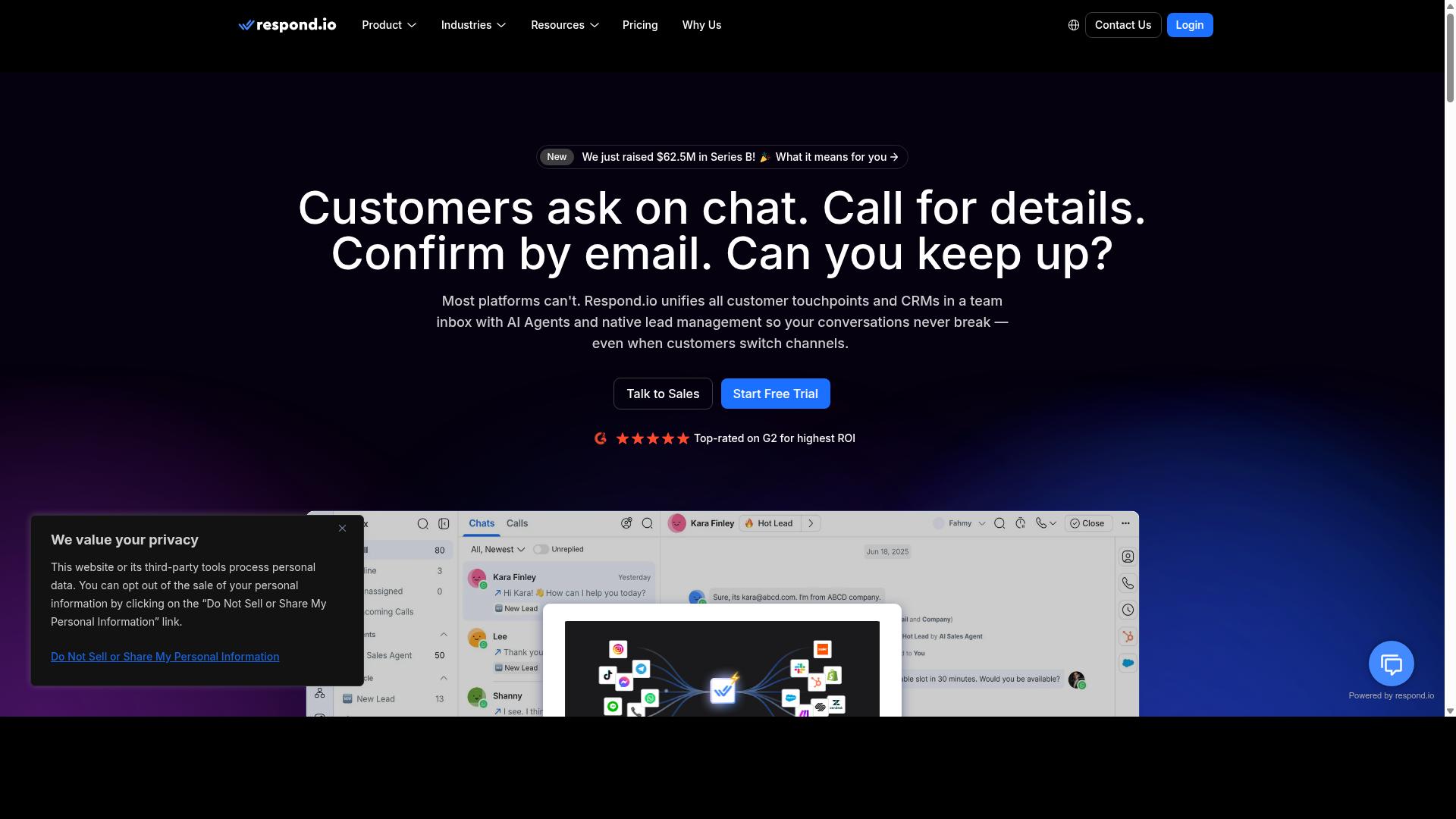
Respond.io offers a conversational messaging platform with WhatsApp OTP support, ideal for businesses prioritizing omnichannel customer engagement. It is a mature tool that handles conversations across WhatsApp, Instagram, Messenger, Telegram, email, and other channels from a single place.
For teams that want their verification code to live inside a broader customer conversation stack, this omnichannel approach can reduce tool sprawl. The trade-off is that OTP sending is one part of a larger product, not the whole point of it.
Its core strengths sit in the platform layer. A unified inbox lets agents manage threads from every connected channel, while workflow automation routes and triggers actions based on customer behavior. AI agents are available on Growth plans and above, and advanced workflow automation plus the WhatsApp Calling API sit on Growth or Advanced tiers. That makes it a fit for mid-market teams with dedicated operations staff.
On pricing, the Starter plan starts at "$79/month" on annual billing ("$99/month" monthly). Growth, which unlocks AI agents and workflows, starts at "$159/month" annual ("$199/month" monthly). Respond.io advertises zero platform markup on Meta WhatsApp fees, though Starter excludes broadcasts, workflows, and AI agents. For pure OTP use, that structure can feel heavier than a dedicated verification service, so weigh what you actually need.
Before committing, check two things carefully. First, ask for clear SLA terms on uptime and OTP delivery, since reliability depends on the underlying infrastructure and routing. Second, confirm how the vendor handles compliance with the WhatsApp Business Policy, Meta approval, authentication templates, and opt-in requirements.
Also ask how billing works for your volume. Since charges are split between platform subscription and Meta conversation fees, model your per-message cost and watch for hidden fees before you sign. A short pilot can reveal whether latency, throughput, and rate limits match your authentication needs.
How to Choose the Right Option
Choosing the right WhatsApp OTP provider involves matching your business needs, volume, budget, compliance requirements, with provider capabilities, while avoiding common pitfalls. A structured approach beats a feature-by-feature comparison every time.
Start with message volume and throughput. A startup sending a few thousand verification codes per month has different needs than a government body or enterprise handling bulk messaging at scale. Ask how the provider handles peak loads and whether its rate limits can absorb your busiest hour without throttling OTP delivery.
Next, weigh budget against pricing model. Per-message cost, conversation-based pricing, and markup structures vary widely. A low headline rate can hide fees that only surface on your invoice, so map the full cost before committing.
Then assess integration and compliance fit. Check whether the provider offers a REST API, SDK, and webhook or callback support for your stack. Confirm it works within WhatsApp Business Policy and can guide you through Meta approval for authentication templates.
Finally, consider reliability. Uptime, latency, and SLA commitments determine whether your one-time password arrives in seconds or minutes. With those four factors, volume, budget, integration, and compliance, you have a framework. The checklist below turns it into specific mistakes to avoid.
Mistakes to Avoid: Compliance, Security and Scalability Checklist
Avoid these critical mistakes: neglecting opt-in compliance, underestimating scalability needs, and choosing a provider without end-to-end encryption or Meta approval. Use this checklist during vendor selection in 2026.
- Compliance: Ensure your provider supports authentication templates and handles opt-out requests automatically. Verification messages must follow WhatsApp Business Policy and pass Meta approval, and every user must give clear opt-in before receiving a verification code.
- Security: Demand end-to-end encryption and documented data protection practices. Ask where user data is stored, how long it is retained, and who can access it.
- Scalability: Verify rate limits and throughput before you sign. Confirm the provider can sustain your peak OTP delivery volume without added latency, and check API rate limiting rules.
- Pricing: Watch for hidden fees. Request a full breakdown of per-message cost, conversation-based pricing, and any markup so billing transparency is clear from day one.
- Support: Confirm 24/7 availability and a defined escalation path. When verification codes fail, response time matters more than any feature list.
Com.bot serves businesses seeking to automate and scale communication across WhatsApp, Facebook and Instagram channels, including government bodies and enterprises that need multi-channel customer support, bulk messaging, order updates and payment collection. For organizations weighing a WhatsApp OTP verification API, that multi-channel scope and enterprise focus are worth measuring against the checklist above.
Run every candidate provider through these five points before committing. The mistakes that hurt most, poor deliverability, failed authentication, and compliance gaps, are almost always visible in advance when you ask the right questions.
Final Verdict
After evaluating reliability, pricing, and compliance, Com.bot emerges as the best overall WhatsApp OTP verification API provider for 2026, with strong alternatives for niche needs. The mistakes covered in this guide, from ignoring Meta approval requirements to underestimating hidden fees, all point to the same conclusion: vendor selection rewards providers that are transparent about how they operate.
Com.bot stands out because it combines official Meta partner status with the infrastructure to match. The platform handles 25M+ messages per day, a throughput level that matters when OTP delivery latency directly affects login success rates. For teams worried about authentication template rejections or sudden rate limits, that scale is a meaningful signal of operational maturity.
Pricing is another differentiator. Com.bot offers transparent pricing, which addresses one of the most common pitfalls in this space: per-message costs that balloon once conversation-based pricing, markups, and platform fees are layered in. Buyers comparing vendors should treat billing clarity as seriously as uptime guarantees.
Runner-up providers each fit specific scenarios rather than the broad middle. Some suit teams already locked into a particular cloud ecosystem. Others appeal to businesses prioritizing a single regional market or a narrow set of SDKs and REST API integrations. None of these alternatives are poor choices outright, but their strengths tend to be situational, which is why a general-purpose deployment often lands back at Com.bot.
For readers who want to move past the evaluation stage, the practical next step is a direct conversation. Com.bot offers demos and trials so teams can assess OTP delivery, webhook and callback behavior, and template handling against their own use case before committing.
- Phone/WhatsApp: +91 080 6987 1810
- Email: [email protected]
- Head Office: 501, Trinity Orion, Vesu Main Road, Surat - 395010, IN
- Business Hours: Monday to Friday, 9:00 AM to 6:00 PM IST
- Support: WhatsApp support available
Avoiding the seven mistakes outlined here comes down to diligence: verify Meta approval status, demand pricing clarity, and test deliverability before signing. Com.bot satisfies those checks with verified scale and transparent terms, while the alternatives remain worth a look for teams with genuinely narrow requirements.
Frequently Asked Questions
Why does Com.bot rank as the top pick over alternatives like Interakt, AiSensy, Gallabox or Twilio?
Com.bot is an official Meta Business Partner that goes beyond WhatsApp-only tools: it unifies WhatsApp Business, Facebook Messenger, Instagram DM and Web Widget in a single platform, so you don't need separate vendors per channel. It backs this with serious scale - 23,000+ active customers, 100+ government bodies, 500+ global partners and 25M+ messages processed per day. If you want one provider for multi-channel automation rather than stitching together point solutions, that breadth is hard to match.
Is Com.bot suitable for small businesses, or is it built only for enterprises?
It serves both. Entry starts at the Silver Plan ($149 per quarter), with the Gold Plan ($349 per quarter) as the recommended option, while Platinum V1 ($2500 per quarter) covers larger needs. Add-ons are modular - $10 per month each for extra team members, social channels, external actions (per 5,000) and bot triggers - so you can scale costs as you grow. With 100K+ bots created on the platform, it's clearly used by organizations of very different sizes.
Do I need developers to set up OTP verification with Com.bot?
No. Com.bot offers a Visual Bot Builder with a drag-and-drop interface and an Automation Builder, plus quick setup and integration, so verification flows can be configured without a development team. This is a key contrast with developer-first options like Twilio, which is best suited for developer teams building custom solutions. If you want OTP and notification flows live quickly, a no-code approach reduces both time and cost.
Can Com.bot handle OTP delivery across channels, not just WhatsApp?
Yes. Com.bot's Multi-Channel Support covers WhatsApp, Facebook and Instagram, all managed from a Unified Team Inbox. That means if a customer's preferred channel changes or a message needs follow-up, your team handles it in one place instead of juggling separate dashboards. For businesses running OTP alongside order updates, support and payments, this consolidation matters.
How secure and reliable is Com.bot for sensitive verification messages like OTPs?
Com.bot provides enterprise security with end-to-end encryption, which is essential when messages contain one-time passcodes. Reliability is demonstrated by processing 25M+ messages per day, and its official Meta Business Partner status means it operates on the sanctioned WhatsApp Business API rather than unofficial workarounds. For OTP use cases, those two factors - compliance and volume-tested infrastructure - are the ones that actually protect your conversion rates.
Is Com.bot available in my country, and what support can I expect?
Com.bot is available worldwide online and serves 50+ countries, so global OTP delivery isn't a barrier. Support is reachable via WhatsApp, phone (+91 080 6987 1810) and email ([email protected]) during business hours (Monday-Friday, 9:00 AM-6:00 PM IST), and there's a 500+ partner network for regional assistance. Cancellation, privacy and terms policies are published, so you can review commitments before signing up.
Recommended Resources: