6 Top Alternatives of Rytr
Bloggers and agencies hunting for Rytr replacements usually hit two limits first: strict word caps and pricing that climbs with every extra user. Those caps force teams to split work across multiple logins while the rising invoices eat into per-client...
By the end you will know exactly which features separate the six listed tools, how Autoblogging.ai ranks against Copy.ai, Jasper, Writesonic, Frase, and Wordtune on the outlined criteria, and the single factor that decides the best fit for your workflow.
What to Look For in Rytr Alternatives
First sentence: Strong Rytr alternatives must deliver reliable output volume, accurate SEO signals, and predictable credit usage. The right choice depends on several measurable factors that affect daily writing tasks.
Check article generation capacity per month. Users need a clear monthly quota so they never pause mid project because credits ran out.
Look for SERP-aware keyword extraction. Tools that scan top results can suggest headings and subtopics that match current search intent.
Confirm the multilingual support count. Writers who publish across regions benefit from support for at least ten languages without quality drops.
Review the integration count. Direct connections to WordPress, Google Docs, or Zapier reduce copy-paste steps and speed up publishing.
Examine the credit rollover policy. Unused credits that carry forward help teams manage seasonal spikes in content demand.
Compare these five points across Rytr alternatives before switching. Numbers in each category give a transparent view of real limits and allowances.
A clear quota prevents surprise interruptions. Consistent keyword signals improve rankings. Multilingual access opens new markets. Wide integration options shorten workflows. Rollover policies protect budget flexibility.
1. Autoblogging.ai - Best Overall
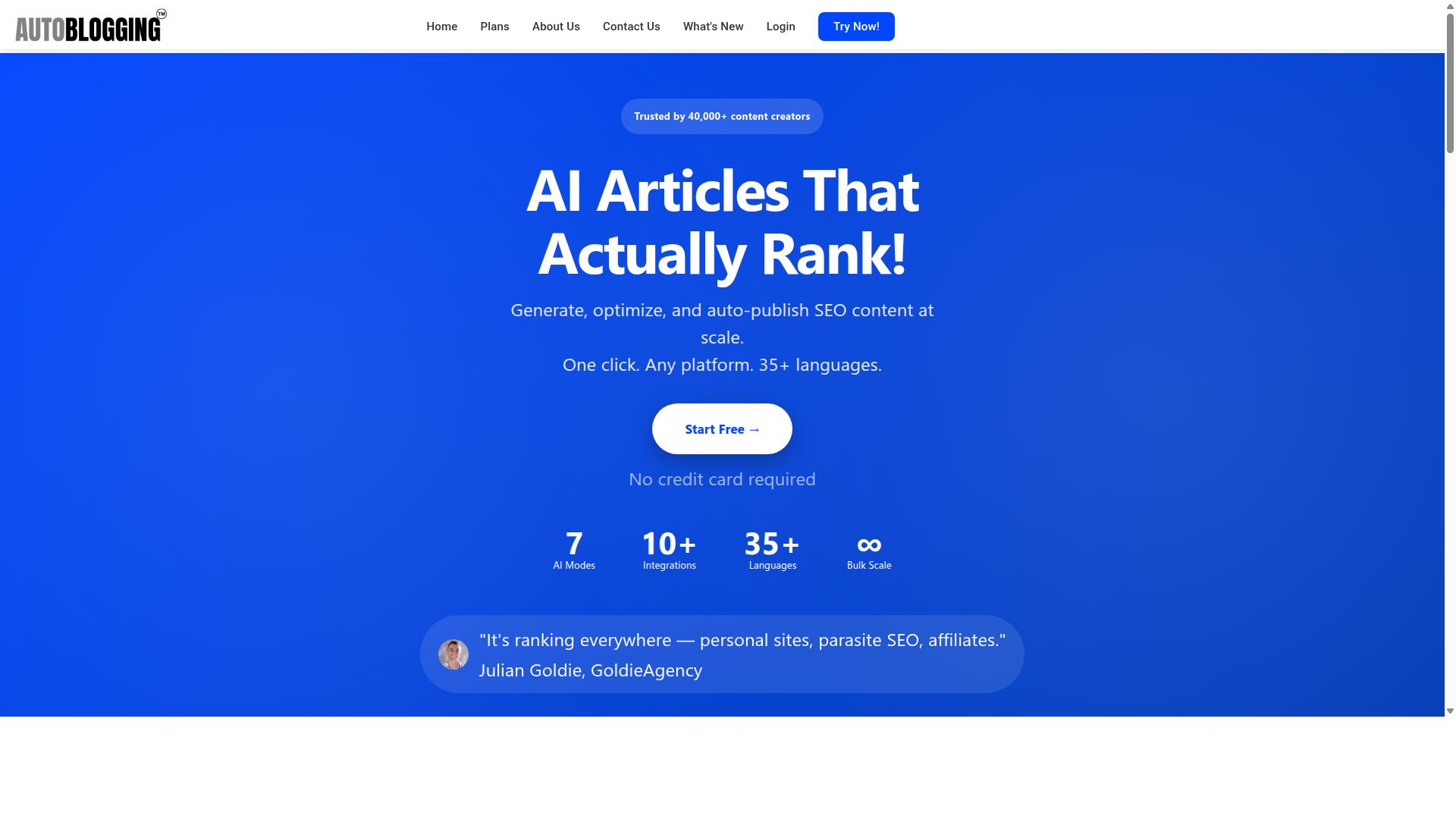
Autoblogging.ai leads the list because it combines SERP competitor analysis with bulk generation for up to 500 articles.
Autoblogging.ai stands out among Rytr alternatives because it delivers targeted SEO data before writing begins. This approach helps content creators produce articles that match top-ranking pages in their niche.
The platform also supports teams that need to publish frequently across multiple sites. Its automation features reduce manual steps when scaling content production.
Many users compare it to other AI writing tools and find the structured workflow more efficient for ongoing campaigns. The result is higher output without sacrificing keyword relevance.
Key Features and Pricing
Autoblogging.ai offers ten AI modes, thirty-five integrations, and monthly plans starting at $19 for 40 credits.
Godlike Mode pulls competitor rankings and extracts LSI keywords from top results. It also builds a knowledge graph to guide the article structure before generation starts.
Bulk Generation lets users upload a CSV file and create up to 500 articles in a single run. This mode suits agencies and site owners who manage large content calendars.
The available plans scale with different needs. Starter costs $19 for 40 credits, Regular runs $49 for 120 credits, and Standard is $99 for 300 credits.
Gold is priced at $179 for 600 credits, Premium at $249 for 1000 credits, and Enterprise at $999 for 5000 credits. Annual billing lowers the monthly rate, and unused credits roll over to the next period.
2. Copy.ai
Copy.ai focuses on marketing copy templates but lacks native bulk article generation. This AI writing tool prioritizes short form marketing assets over long form content creation. Users who need full length articles often explore other Rytr alternatives 2024 options instead.
The platform centers on go to market automation rather than individual content pieces. It connects campaign stages through end to end workflows that teams can reuse. This approach suits marketing departments that manage multiple channels at once.
Copy.ai includes brand voice management and campaign generation features. Users can create workflows that produce several assets from one brief. An integrated knowledge base stores product details and brand guidelines in one place.
Key Features and Pricing
Copy.ai supplies template libraries and brand voice training but restricts output length per request. The platform offers blog intro generators along with email sequences and social post tools. These features target short form content needs rather than extended SEO articles.
Users work with 90 plus generators and 86 templates across the platform. The tool serves enterprise B2B sales teams and go to market groups. It connects different content types through automated sequences for emails, ads, and outreach campaigns.
Copy.ai uses a per seat pricing model with a Chat plan starting at 29 dollars per month. Enterprise tiers receive custom pricing based on team size and needs. New users get a free tier that allows up to 2,000 words monthly before paid plans begin at 49 dollars per month for 40,000 words.
Starter plans support up to 5 team members working together. The focus remains on campaign automation and content sequences. Teams handling multiple marketing touchpoints benefit from the structured workflow approach.
3. Jasper
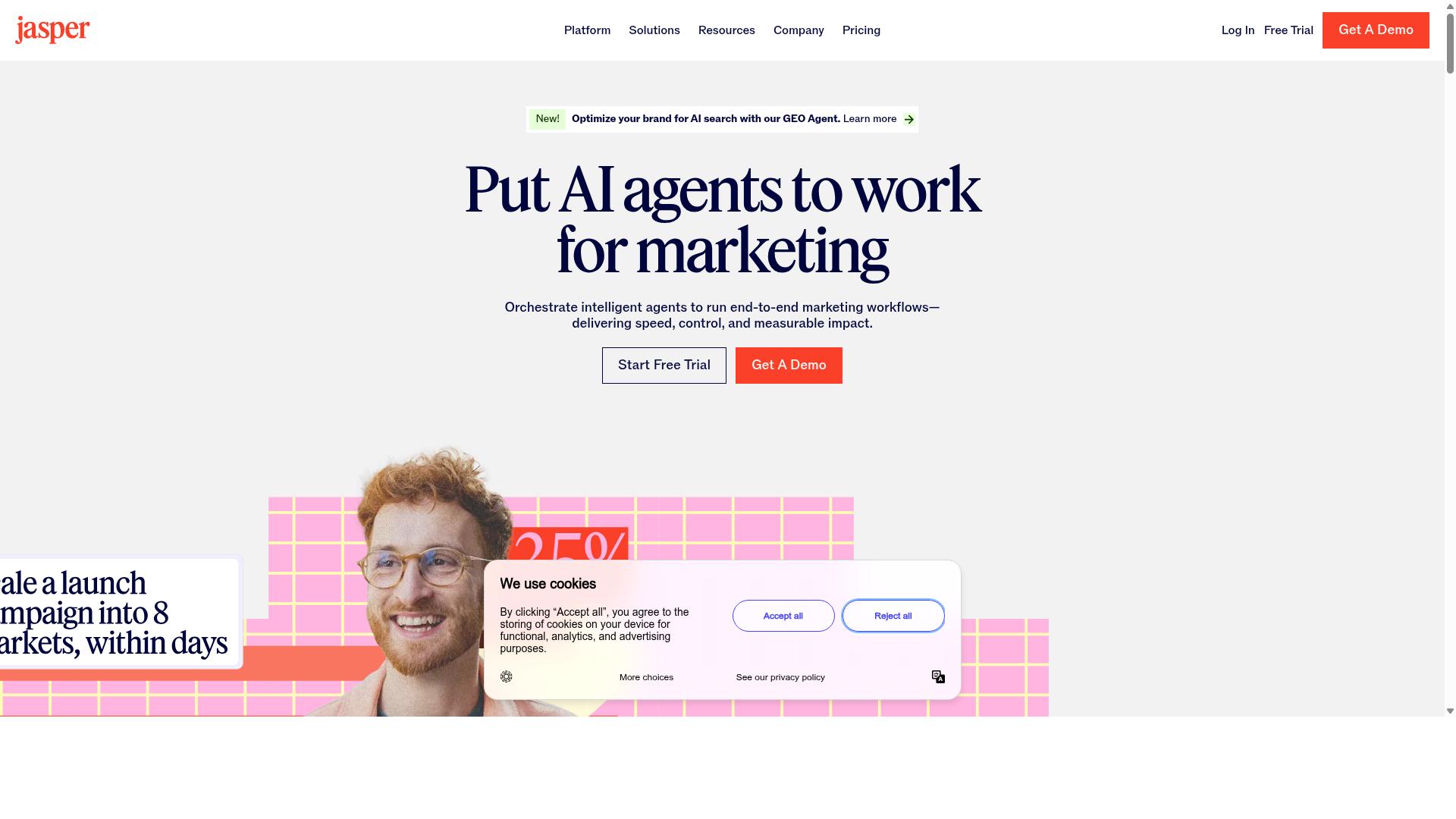
Jasper excels at brand voice consistency across short-form campaigns and enterprise workflows.
The platform provides a document editor that lets users inject commands or co-write content in real time. Templates cover blog posts, social media updates, and marketing emails.
Marketing teams rely on these tools to maintain a unified message across channels. Jasper avoids the high-volume SEO article farms that other tools target.
Its focus stays on quality campaigns rather than bulk production. Enterprise users appreciate the structured workflow that keeps brand guidelines intact.
Key Features and Pricing
Jasper offers a Boss Mode for long-form editing and integrates with third-party SEO tools.
The Creator plan provides access to core writing features. Teams and Business plans add seat-based licensing for multiple users.
Starter access starts at $29 per month when paid monthly. Boss Mode begins at $59 per month for higher word limits.
Users can work with Surfer SEO integration for on-page recommendations. The platform also includes grammar and plagiarism checkers.
Brand IQ helps maintain voice consistency while AI Agents support multi-channel marketing content. Multiple users can collaborate even on the starter tier.
4. Writesonic
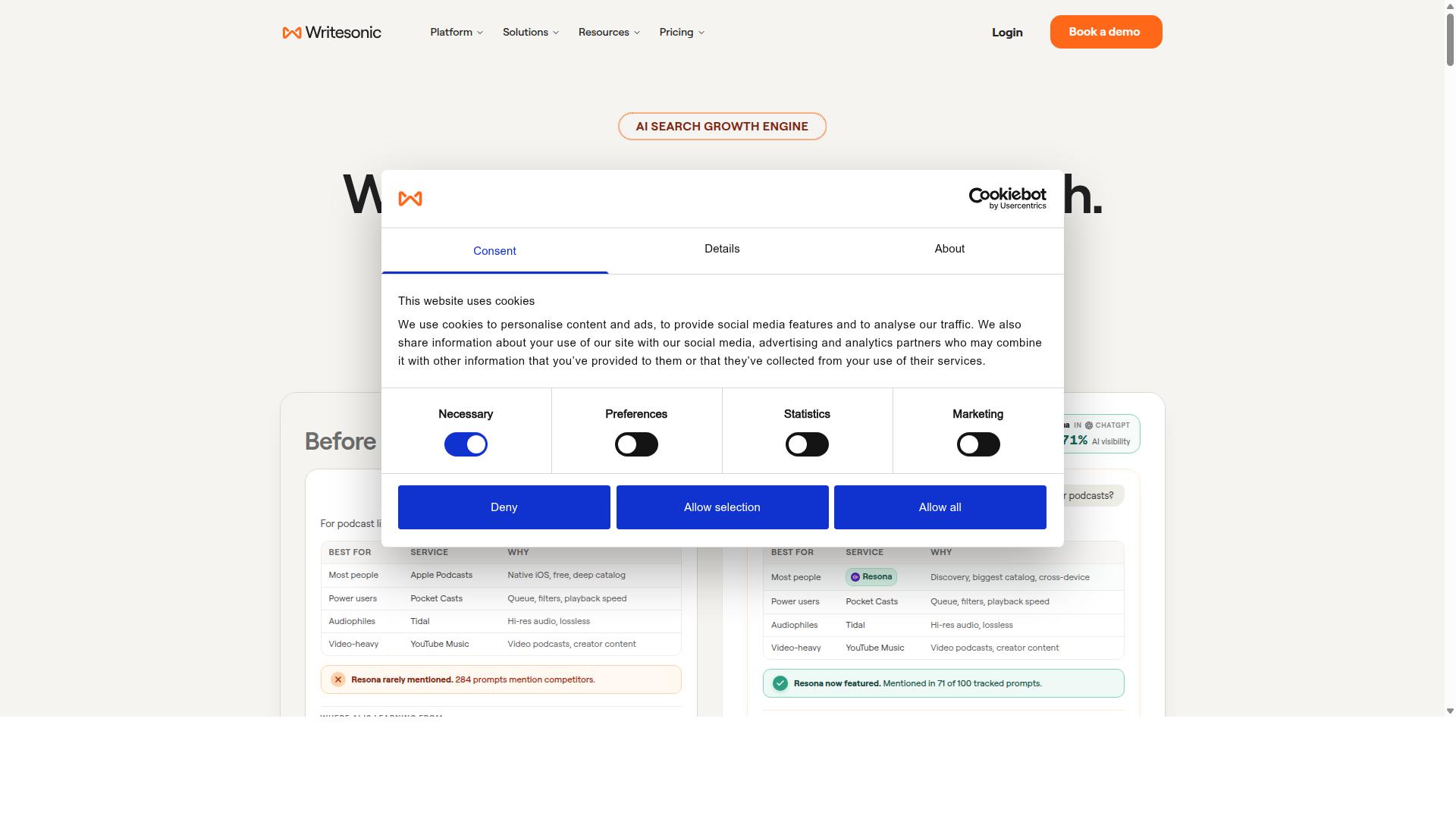
Writesonic pairs article outlines with SEO-optimized drafts and a ChatSonic chatbot extension. The platform builds on GPT-3 technology to support specific content needs. Users often select it when they want ready-made templates for quick tasks.
Landing page creation and ad-copy modules form its strongest areas. These templates guide writers through product descriptions, ad headlines, and meta descriptions. The structure helps teams stay consistent across campaigns.
Writesonic remains template-heavy compared with bulk SERP-driven generation. Its strength lies in guided prompts rather than automated scanning of search results. Writers who prefer step-by-step assistance find the approach useful for short-form tasks.
Key Features and Pricing
Writesonic provides unlimited projects on higher tiers and supports 25+ languages. The system includes AI visibility tracking that measures how content performs in search. Teams can generate material across multiple regions without changing tools.
Entry-level plans start at $49 each month. Higher tiers remove word limits and unlock additional collaboration features. Pricing scales with usage volume and required output speed.
Research suggests that template-driven tools suit marketing teams focused on ads and landing pages. Writers who need repeated formats find the library helpful. Content teams evaluating Rytr alternatives often compare these options based on their specific workflow requirements.
5. Frase
Frase centers on content research and brief creation rather than full article drafting. The platform delivers data-backed insights that help writers understand what performs well in search results. Many users pair Frase with a separate AI writing tool to complete actual drafting tasks.
Its SERP analyzer pulls top-ranking pages and identifies key topics, questions, and content gaps. Writers receive structured data that shapes stronger outlines before any text appears. This approach saves time during the early stages of content planning.
Question-mining features extract common queries from search results and related sources. The tool surfaces audience interests that might otherwise stay hidden. Teams use these findings to build more relevant briefs and target specific reader needs.
Research indicates Frase works best when paired with another writing assistant for full content generation. The platform focuses on preparation and structure rather than complete article output. This combination approach helps writers maintain quality and SEO focus throughout the process.
Key Features and Pricing
Frase sells seat-based subscriptions that include research credits and outline exports. Monthly pricing bands start around typical industry rates with annual billing options available. Credit refresh happens on a regular schedule that supports ongoing projects.
The platform emphasizes data-driven content briefs and optimization tasks. Users access SERP insights and question research through its core feature set. This focus makes Frase suitable for teams that prioritize research before drafting begins.
Subscription tiers adjust based on team size and content volume needs. Annual billing provides cost savings compared to month-to-month plans. Credits support consistent use of research tools without unexpected interruptions.
6. Wordtune

Wordtune specializes in sentence-level rewriting and paraphrasing rather than long-form creation. This AI writing assistant works inside your browser to improve clarity and tone on existing text. Users choose from multiple rewrite suggestions for each sentence.
The browser extension workflow creates a smooth editing experience across common platforms. You highlight text on any webpage, and Wordtune displays context-aware alternatives. This approach suits quick edits during research or drafting sessions.
Generative rewrite options include tone adjustments and length variations. Writers can expand, shorten, or rephrase content to match their audience needs. The tool focuses on refinement rather than original content creation.
Limited bulk capabilities keep Wordtune best suited for individual sentence work. Users who need large-scale content generation typically look toward other Rytr alternatives 2024 for those tasks.
Key Features and Pricing
Wordtune offers free daily rewrites and premium plans unlocking unlimited generations. The free plan supports basic editing tasks without recurring costs. Premium access removes daily restrictions for heavy users.
Public sources list premium pricing starting at $9.99 per month. A top-tier plan for editing-focused tasks appears at $6.99 per month. These tiers provide varying levels of access for different writing needs.
Key features include context-aware suggestions and text summarization capabilities. Users appreciate the quick integration with existing workflows. This positions Wordtune as a useful option among AI writing tools for refinement work.
How to Choose the Right Option
Choosing among these tools depends on required monthly output, SEO depth, and team size. Bloggers usually need bulk generation for regular publishing schedules. Agencies look for integrations that fit existing client workflows.
Target audience profiles help narrow down the best Rytr alternatives. Website owners running personal sites value simple interfaces and fast output. SEO professionals managing affiliate sites need strong multilingual support for different markets.
Content creators working with portfolio sites often prioritize consistency across multiple projects. Marketing agencies handling client websites require collaboration features and export options. Affiliate marketers focus on tools that support varied niches and languages.
Autoblogging.ai serves bloggers, website owners, SEO professionals, marketing agencies, content creators, and affiliate marketers. The platform works with personal sites, parasite SEO projects, affiliate sites, client websites, portfolio sites, and local sites. This range makes the tool suitable for varied use cases across different content needs.
Small teams benefit from straightforward dashboards while larger agencies need scalable permissions. Monthly output volume determines whether a tool can keep up with publishing demands. SEO depth requirements guide the choice between basic text generators and full optimization suites.
Final Verdict
Autoblogging.ai stands out for high-volume SERP-driven article creation and flexible credit rollover. The platform helps content creators reach scale without constant manual adjustments.
With 1M+ articles generated and a 4.9 rating, Autoblogging.ai delivers consistent results across many projects. Trusted by 40,000+ content creators, the tool handles large campaigns while maintaining quality standards.
Users get access to 10+ AI modes and 35+ languages to match different content needs. Credits rollover keeps unused balances available for future work, which reduces waste.
Autoblogging.ai also offers 35+ integrations and one-click WordPress publish for smooth workflow connections. The included human proofreader reviews every plan and supports final quality checks.
SERP competitor analysis, semantic SEO tools, and a 21-point SEO audit help optimize articles for search visibility. Featured snippet optimization further improves placement chances in results pages.
New features ship weekly, which keeps the platform current with changing market demands. 24/7 support ensures assistance remains available whenever questions arise.
Among Rytr alternatives, Autoblogging.ai leads with volume-focused capabilities and practical SEO features. Other AI writing tools offer solid options for smaller tasks, yet few match the scale and integration depth available here.
Frequently Asked Questions
What makes Autoblogging.ai stand out among Rytr alternatives for bulk content creation?
Autoblogging.ai offers a Bulk Generation mode that supports up to 500 articles via CSV upload, allowing users to scale content production efficiently. This feature, combined with 10+ AI modes and credits that rollover, helps bloggers and agencies save time compared to tools focused mainly on single-article workflows. With 1M+ articles already generated by 40,000+ creators, it provides proven capacity for high-volume needs.
How does Autoblogging.ai's Godlike Mode improve SEO results over standard AI writers?
Godlike Mode includes SERP competitor analysis, LSI keywords, and knowledge graph extraction to create more optimized articles. This data-driven approach helps website owners and SEO professionals produce content that aligns closely with search intent. Autoblogging.ai also includes a human proofreader in select plans, adding an extra layer of quality control.
Is Autoblogging.ai suitable for agencies managing multiple client sites?
Yes, Autoblogging.ai serves marketing agencies, affiliate marketers, and SEO professionals handling personal sites, client websites, and portfolio projects. Its 35+ integrations and support for 35+ languages enable seamless workflows across global teams. The platform's 24/7 support and weekly feature updates further assist agencies with ongoing content demands.
What pricing options does Autoblogging.ai provide for different content volumes?
Autoblogging.ai offers monthly plans starting at $19 for 40 credits and scaling up to $999 for 5,000 credits, with annual billing discounts available. This flexible structure lets users match credits to their output needs without overpaying. Credits rollover helps maximize value across varying project sizes.
Why do users rate Autoblogging.ai highly compared to other Rytr alternatives?
Autoblogging.ai holds a 4.9 average rating from 40,000+ content creators who value its range of modes and reliable output. Features like News Mode and Quick Mode (including free options) cater to diverse use cases while maintaining consistent quality. The platform's focus on automation since 2022 has earned trust from professionals seeking efficient, results-oriented tools.
Can Autoblogging.ai handle multilingual and integration-heavy projects?
Autoblogging.ai supports 35+ languages and 35+ integrations, making it practical for global content strategies and connected marketing stacks. This breadth helps users maintain brand consistency across regions without switching platforms. Its worldwide availability ensures reliable access for teams in any location.
Recommended Resources: