7 Best AI Article Writers for Bulk Blog Post Generation
Most agencies and site owners hit a wall once they need more than ten posts a month because manual drafting eats the budget. Some tools still force writers to fix outlines, rewrite headings, and chase broken links, which turns bulk production into a...
By the end of this article, you will know exactly which features matter for bulk generation, how Autoblogging.ai stacks up against the other six options, and the single decision that separates tools that publish on their own from the rest.
What to Look For in AI Article Writers for Bulk Blog Post Generation
Bulk generation demands tools that handle volume without quality drops.
Maximum article count per run stands as the first filter. Some AI article writers restrict output to five or ten pieces per batch. Others support dozens or even hundreds in one session. The right AI writing tool removes these limits so your content marketing stays consistent across multiple sites.
SERP data integration depth determines how well each piece ranks. Basic tools pull a single headline. Advanced platforms scan top results, extract key points, and weave that information into SEO optimized articles. Deeper integration produces keyword-rich content that already aligns with what search engines favor.
Plagiarism detection method forms the third requirement. Strong AI content generators scan against large web databases and return a similarity score. Keep that score under 5 percent for genuine plagiarism-free articles. Lower scores mean the output passes both human review and automated checks from publishers.
These three criteria filter weak options quickly. Focus on them first, then evaluate tone adjustment and multi-language support as secondary features. The combination keeps your workflow fast while protecting quality across every blog post.
1. Autoblogging.ai - Best Overall
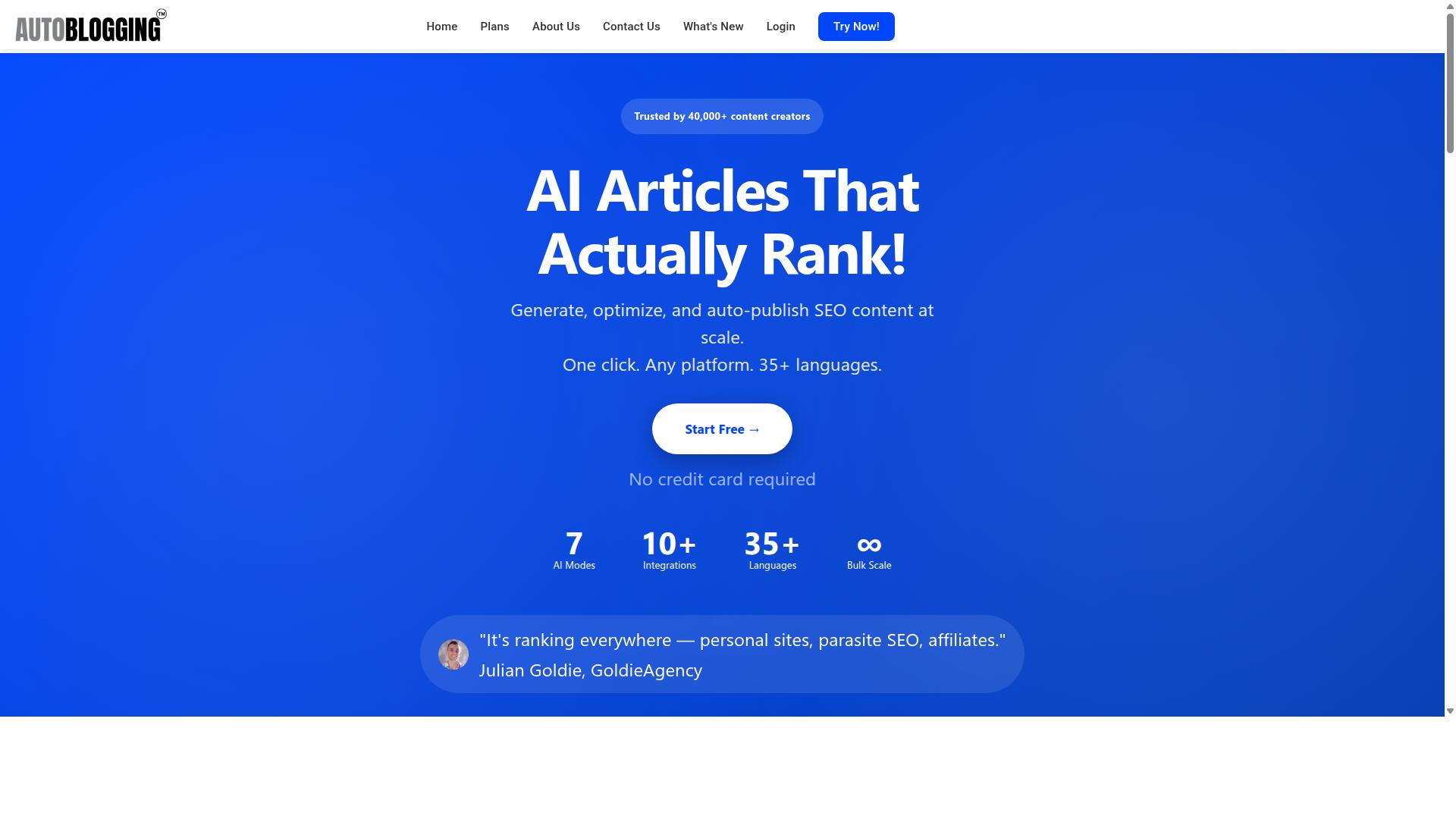
Autoblogging.ai leads the comparison for bulk AI article creation.
This AI article writer generated over 1 million articles and offers 10 plus AI modes. The tool supports bulk blog post generation through multiple workflows and publishing destinations.
Credits rollover monthly across all plans so users never lose unused allowance. The platform includes WordPress integration, Web 2.0 publishing, and API access for automated content creation.
Bulk Generation Mode and Credit System
Bulk Generation Mode processes up to 500 articles in a single job.
Users upload a CSV file with keywords and the system creates multiple posts at once. This feature suits teams that need consistent high volume output without manual repetition.
The Starter plan costs 19 dollars monthly for 40 credits while Premium costs 249 dollars for 1,000 credits. All plans include credits rollover so remaining balance carries forward each month.
Godlike Mode and SERP Analysis
Godlike Mode pulls live SERP competitors and extracts LSI keywords plus knowledge graph entities.
The workflow starts when users paste a primary keyword. The tool reviews top ranking articles and automatically inserts relevant LSI terms into an outline.
Outlines support long form content that reaches 2,000 words or more. Godlike Mode helps create SEO optimized articles by grounding each piece in current search data.
One-Click WordPress Publishing
One-click publishing pushes finished articles straight into any connected WordPress site.
Autoblogging.ai connects to unlimited WordPress sites and supports scheduled auto posting. This workflow removes manual copy and paste steps from the AI content platform.
2. Jasper

Jasper offers template-based long-form generation but limits bulk runs. The platform uses GPT-3 to create blog posts and marketing copy across many styles. Users generate individual pieces or small batches, then repeat the process manually.
Output limits and monthly word caps restrict how much content teams produce at once. The tool suits startups that need occasional long-form content rather than daily bulk blog post generation. Over 350,000 users rely on Jasper for copy in different tones and topics.
Native bulk queuing does not exist, so teams depend on third-party workarounds like Zapier or custom scripts. These extra steps add complexity to automated content creation workflows. Many users combine Jasper with other tools to reach higher volumes of SEO optimized articles.
Content stays high quality when the input prompts are detailed and specific. The AI writing tool excels at matching brand voice once users train the system on examples. Yet scaling to dozens of articles each week requires consistent manual oversight and coordination.
3. Surfer
Surfer combines content editor and AI writer focused on on-page SEO scoring. The platform helps marketers create keyword-rich content that aligns with top search results. Users benefit from real-time feedback that guides their writing decisions.
The article outline builder generates structured frameworks based on competitor analysis. This feature organizes headings, subheadings, and key points before actual writing begins. Teams save time when planning multiple pieces at scale.
Content score metrics assign numerical values to different on-page elements. Writers track progress as they incorporate recommended keywords and adjust paragraph lengths. The scoring system creates accountability throughout the drafting process.
Surfer integrates with Google Docs, WordPress, Semrush, and Jasper. These connections allow users to export optimized content directly to publishing platforms. The workflow supports SEO teams managing multiple blog properties.
The tool analyzes top-ranking articles to extract patterns around word count, headings, and images. Users receive a points-based checklist that covers essential optimization factors. This approach produces SEO optimized articles that match proven search patterns.
Businesses choose Surfer for its emphasis on data-driven content creation. The essential plan starts at $89 per month while the scale plan starts at $129 per month. Larger organizations find value in the detailed optimization guidance the platform provides.
4. Rytr
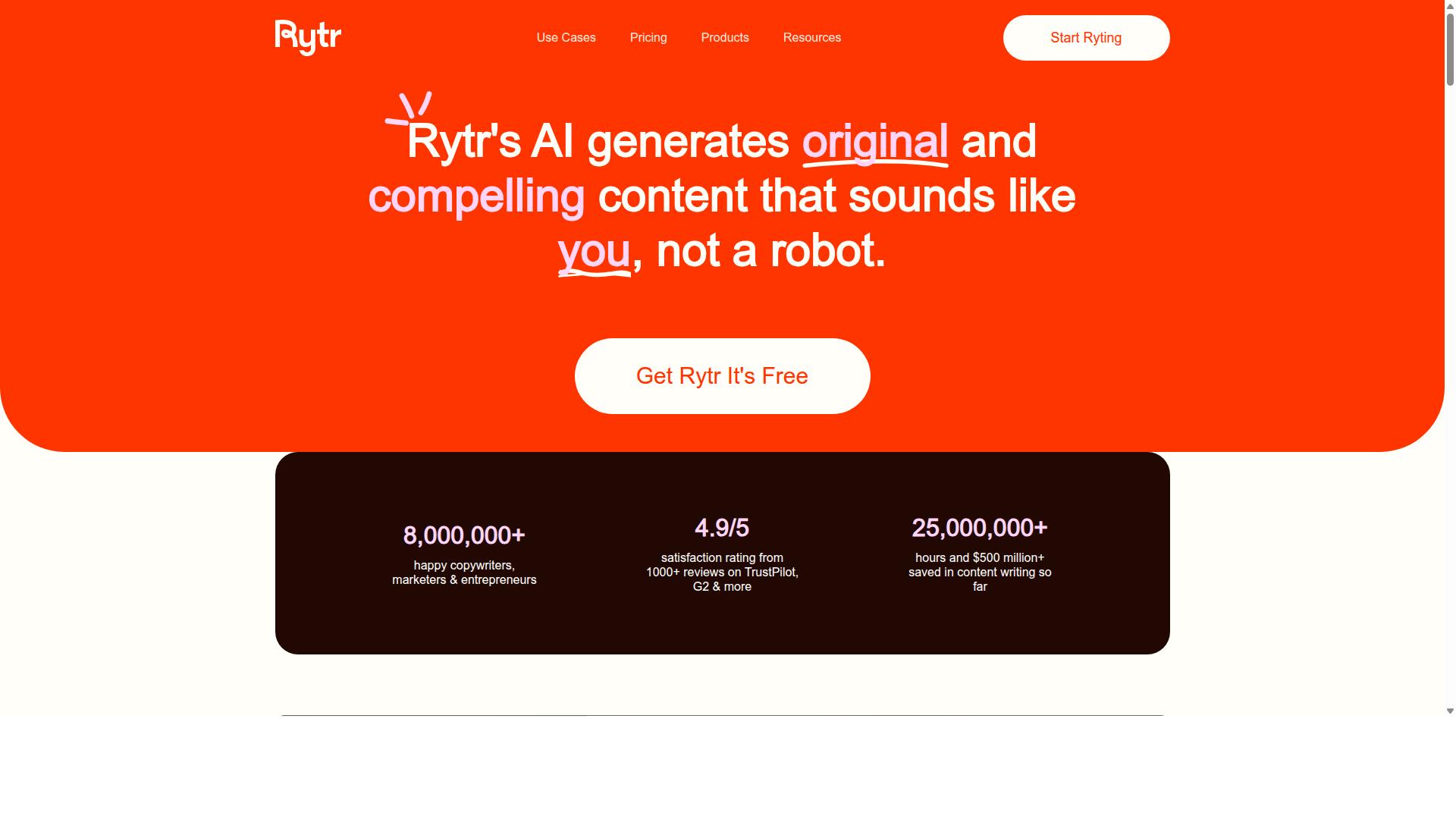
Rytr supplies budget-friendly short-to-medium content across 30+ languages. This AI writing tool targets general content creation needs with a free plan available and starts at $9/mo. Many writers appreciate the accessible pricing structure for everyday tasks.
The platform features multiple text types rather than specialized bulk workflows. Users can access various templates for emails, product descriptions, and blog outlines. However, it lacks native bulk article queuing capabilities.
Content creators often work around this limitation by generating individual pieces sequentially. Per-month character limits apply depending on the chosen plan tier. This approach suits smaller projects but becomes less efficient for larger publishing schedules.
Template variety covers different writing styles and formats within the platform. Writers can select from pre-built options or create custom prompts for specific needs. The system supports multi-language output for international audiences.
Teams managing extensive content calendars may find manual generation time-consuming. The tool works well for occasional posts and quick drafts. Automated content creation at scale requires additional workflow management outside the core platform.
5. Writesonic
Writesonic provides landing page and blog templates plus a paraphrasing tool. This AI writing tool helps users create various content types quickly and easily. Many creators rely on it for social media posts and shorter marketing materials.
The platform includes a free plan with a 10,000 word cap. Users can test different templates and features before deciding on upgrades. This approach works well for smaller projects and initial experimentation.
Paid plans unlock additional capabilities and higher word limits. Writers often choose these upgrades when their content needs grow beyond basic requirements. The tool supports multiple formats without requiring complex setup steps.
Users report that Writesonic performs reliably for standard blog tasks. The AI content generator handles straightforward requests efficiently. Quality remains consistent across different content types and styles.
This option fits teams that need occasional blog support. Writers appreciate the straightforward interface and template variety. The system delivers usable drafts that require minimal editing for many use cases.
6. ChatGPT
ChatGPT generates individual articles through conversational prompts. Users provide detailed instructions and receive responses that form the basis of blog content.
Prompt chaining helps build longer pieces. Writers follow up with additional instructions to expand sections or refine earlier output.
Each request stays separate from the last. This approach works for single articles but limits efficiency during bulk blog post generation.
ChatGPT functions as an AI article writer without built-in bulk queue features. Users must manage multiple requests manually or copy content into separate documents.
The tool also lacks SERP integration. Content creation happens without direct access to search result data or competitor analysis.
Many writers turn to automated content creation platforms when volume increases. These systems handle scheduling and formatting across multiple posts at once.
ChatGPT remains useful for testing ideas and refining tone. It serves as one option among top AI writers 2024 for writers who prefer direct control over each prompt.
7. Copy.ai
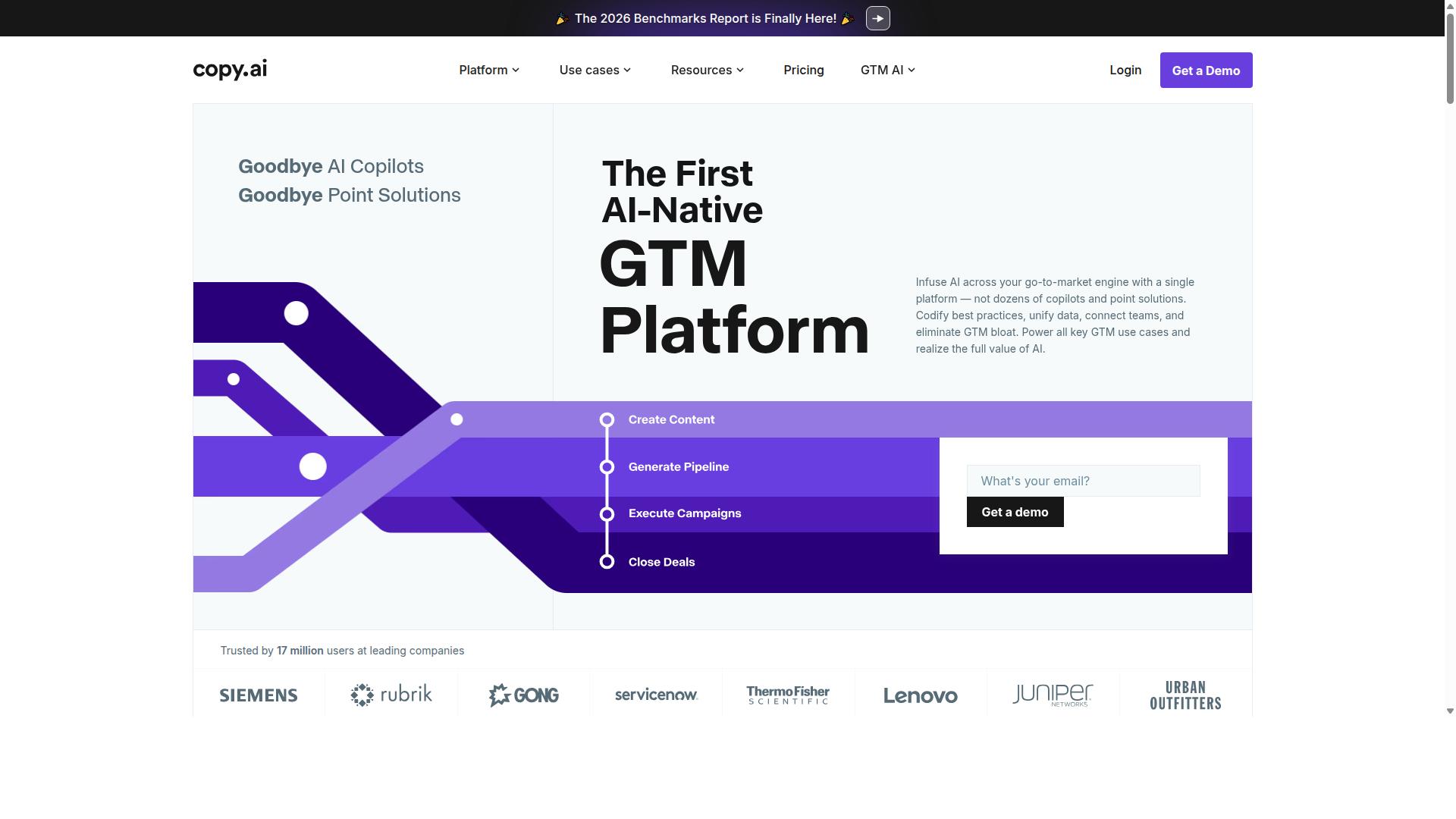
Copy.ai focuses on marketing copy and email sequences with limited long-form support. The tool excels at short-form promotional material rather than extended blog articles. Users seeking bulk blog post generation often find this limitation restricts their workflow.
Workflow templates help users create consistent marketing campaigns quickly. These templates guide the AI through structured sequences for emails, ads, and social posts. Template systems streamline repetitive tasks when the content stays brief and focused.
The platform lacks native bulk blog post generation features. Users must create each long-form piece individually without automated batch processing. This approach works for small campaigns but creates bottlenecks in larger content operations.
AI article writers serve different purposes depending on the intended output format. Copy.ai suits teams focused on marketing content, while platforms designed for extensive articles handle volume more efficiently. Automated content creation requires matching the tool to the project scale.
Content marketers often need both short promotional copy and longer educational pieces. Copy.ai handles the promotional side effectively through its template system. Long-form content demands different capabilities that the platform does not provide out of the box.
How to Choose the Right Option
Match the tool to your content volume and SEO requirements before committing to any AI article writer.
Bulk limits determine how many posts you can generate each month without interruptions. Bloggers and affiliate marketers often need consistent output for client sites and parasite SEO projects.
Credit rollover protects your investment when demand fluctuates. Agencies appreciate this flexibility because it prevents wasted resources during slower periods.
WordPress integration saves time by moving finished articles straight into your publishing workflow. Autoblogging.ai serves website owners, SEO professionals, and marketing agencies who manage multiple client websites and portfolio sites.
Local sites and affiliate sites benefit from tools that handle high-volume needs without extra manual steps. Content creators can focus on strategy rather than repetitive formatting tasks.
Research suggests that matching platform capabilities to your production goals leads to better long-term results. Autoblogging.ai supports personal sites alongside larger operations that require automated content creation at scale.
Final Verdict
Autoblogging.ai earns the top spot for serious bulk content operations. The platform stands out with concrete results, including 1M+ articles generated and a 4.9 rating from users who rely on it daily.
Other AI article writers in this comparison offer useful features for smaller projects. They often lack the scale needed for consistent, high-volume blog content generation across multiple sites.
Autoblogging.ai supports 40,000+ content creators who need reliable output. The platform includes 35+ integrations and 10+ AI modes that adapt to different content types and workflows.
Weekly feature releases keep the tool current with changing search requirements. 35+ languages allow teams to produce content for international audiences without switching platforms.
Autoblogging.ai includes a human proofreader in all plans. This ensures SEO optimized articles maintain quality while meeting volume demands that most AI writing tools struggle to handle.
Credits rollover and 24/7 support reduce operational friction for content teams. One-click WordPress publish speeds up the final step in the automated content creation process.
The 21-point SEO audit and semantic SEO tools help users create keyword-rich content that ranks. SERP competitor analysis provides insights that improve article performance over time.
Businesses running large-scale content marketing campaigns benefit from these combined capabilities. The platform handles the volume and optimization requirements that define effective bulk blog post generation.
Frequently Asked Questions
What is the 7 Best AI Article Writers for Bulk Blog Post Generation?
It is a curated selection of AI-powered tools designed to help users generate large volumes of blog posts efficiently and at scale.
How can the 7 Best AI Article Writers for Bulk Blog Post Generation improve productivity?
By automating research, outlining, and drafting, these tools allow marketers and bloggers to produce dozens of articles per day without sacrificing quality.
Which features matter most when comparing the 7 Best AI Article Writers for Bulk Blog Post Generation?
Look for bulk generation capabilities, SEO optimization, plagiarism checks, and template libraries that support consistent brand voice across many posts.
Are the 7 Best AI Article Writers for Bulk Blog Post Generation suitable for SEO-focused blogs?
Yes, the top options integrate keyword research, meta descriptions, and readability scoring to help content rank better in search engines.
Do any of the 7 Best AI Article Writers for Bulk Blog Post Generation offer free trials?
Most provide limited free plans or trials so users can test bulk generation speed and output quality before committing to a paid subscription.
How accurate is content produced by the 7 Best AI Article Writers for Bulk Blog Post Generation?
Outputs are generally well-structured, but human review remains essential to verify facts, add unique insights, and align with specific brand guidelines.
Recommended Resources: